 English
 العربية
 Français
 Deutsch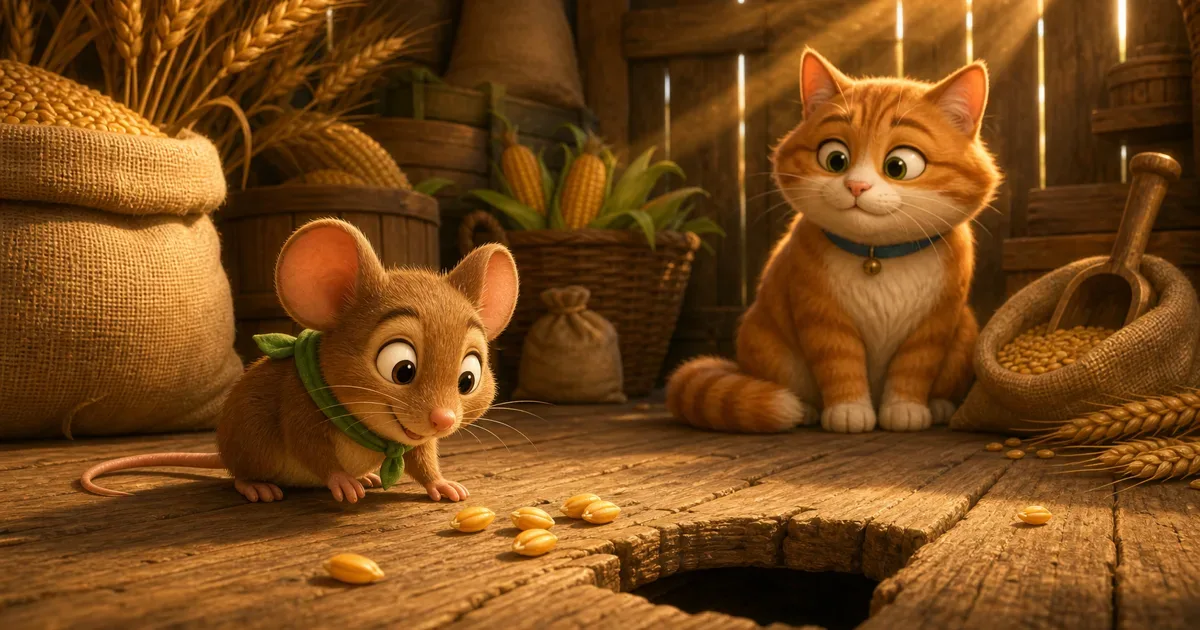
On a wide farm, there was a large storehouse filled with wheat and corn. Near the storehouse lived a little mouse who loved shiny wheat grains.
The farmer had placed a big cat named Mischief to guard the storehouse, so the mouse wondered every day:
🐭 How can I reach the wheat without Mischief seeing me?
The Tunnel Idea
The mouse dug a small tunnel under the ground until he reached the bottom of the storehouse. There he found a tiny hole in the wooden floor. One grain of wheat fell through it each day.
The mouse was delighted.
🐭 One grain a day is enough for me, and I can stay safe here.
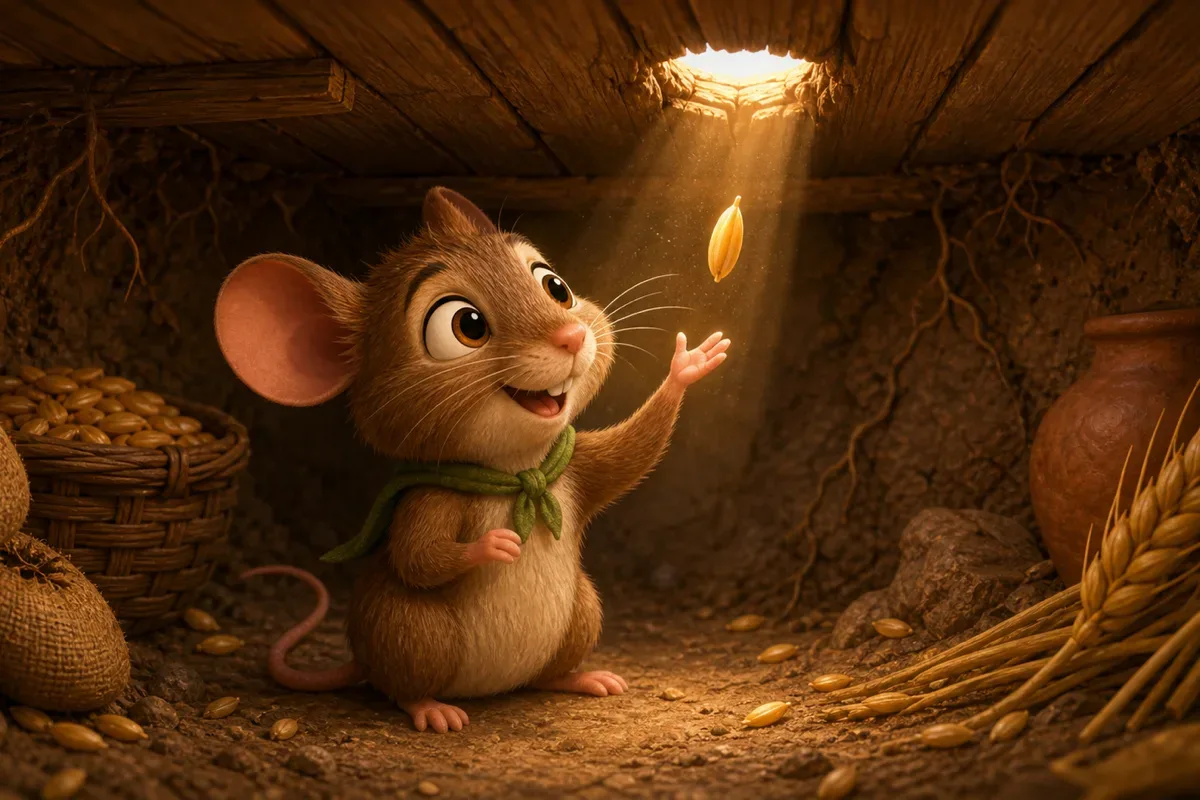
For many days, the mouse ate his small grain and slept peacefully.
Greed Begins
One morning, the mouse looked at the hole and said:
🐭 Why should I wait for one grain? If I make the hole a little wider, more wheat will fall.
He began to chew the wood with his teeth, and many grains fell down. The mouse was happy, but he did not stop.
He told himself:
🐭 Just a little more, then I will stop.
But "a little more" became more and more, until the hole was much too wide.
A Lesson at the Hole
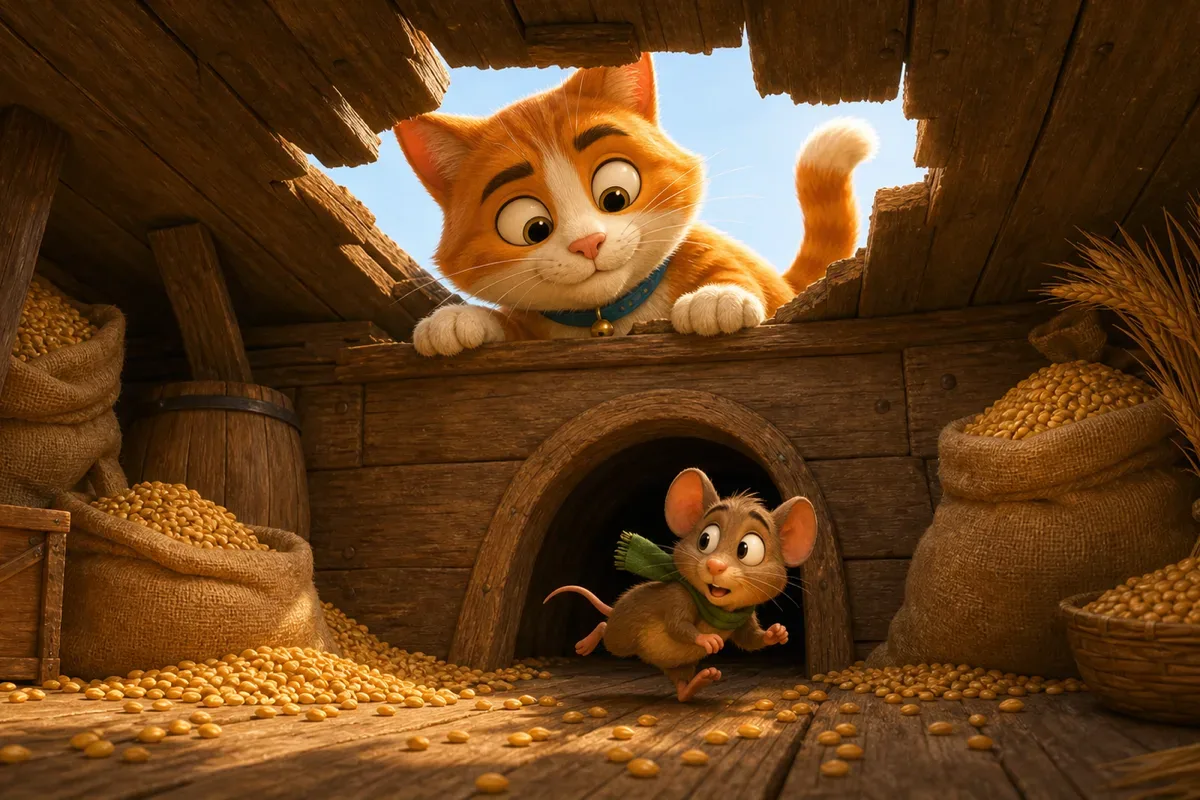
Suddenly, the mouse heard footsteps above him. Mischief the cat had noticed the wide hole and came closer slowly.
The mouse looked at the many grains around him, then at the cat's shadow, and trembled.
🐭 Oh no. I lost my safe place because I wanted too much.
The mouse jumped back into his narrow tunnel and escaped with difficulty, but he left all the grains behind.
From that day on, the mouse was content with what was enough. He would tell every young mouse:
🐭 A small safe amount is better than a lot that leads us into danger.
What We Learn
- Being content can make us safer and calmer.
- Greed can make us lose what was already enough.
- Knowing the right limit can protect us from trouble.
After-Reading Discussion
- Why was the mouse happy at first?
- What happened when the mouse made the hole too wide?
- When is it better to be satisfied with enough?