 English
 العربية
 Français
 Deutsch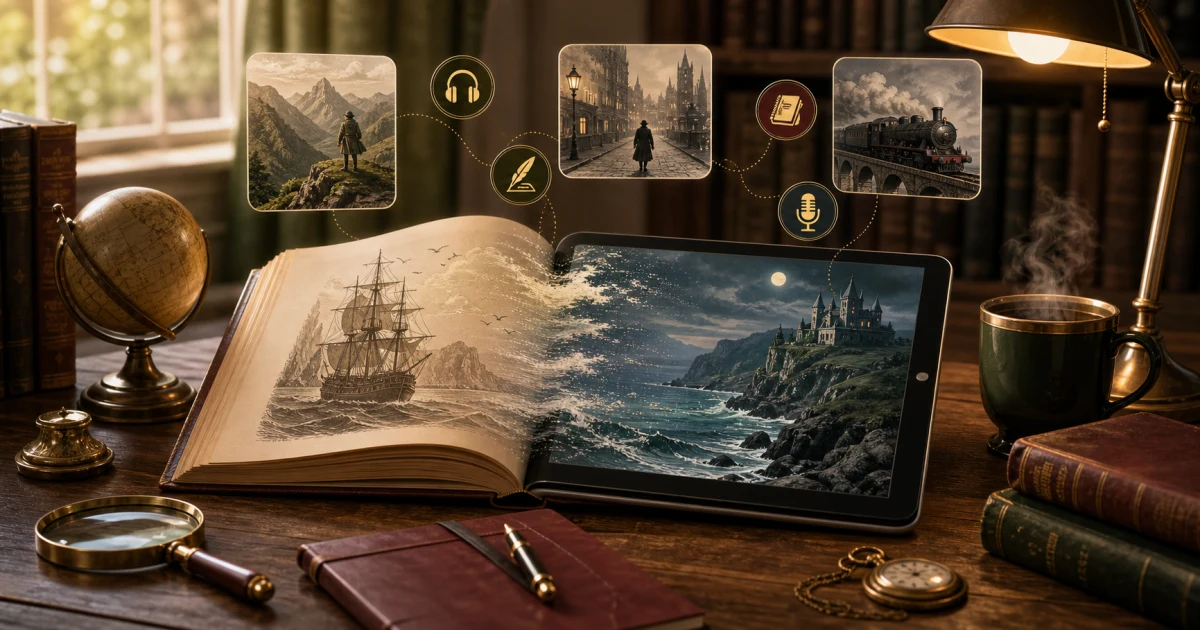
Why classic books need a modern reading path
Classic literature has a strange problem. Many of the books are famous, important, and widely recommended, but they can still feel hard to start. The language may be older, the chapters may be long, and a printed copy is not always nearby when you have a free moment.
Interactive classic book apps help solve that practical problem. They do not change the value of the original story. Instead, they make the reading experience easier to enter from a phone or tablet, with focused sessions, mobile navigation, notes, and a format that fits modern routines.
What makes a book app different from a PDF?
A PDF is useful when you want a fixed page that looks like the printed book. But reading a novel or a long work on a small screen can be tiring if every page needs zooming and panning.
An app can offer a more comfortable reading flow. Chapters can be easier to navigate, text can adapt better to the screen, and the reader can return to the same place without searching through pages. For younger readers, language learners, and casual readers, that small difference matters.
The goal is not to turn literature into a game. The goal is to reduce friction. If opening the book is easy, reading one more chapter becomes more likely.
Good uses for interactive classics
Interactive classics are useful for students who need to revisit a story in short sessions. A student can read on the bus, review a chapter before class, or keep notes while moving through the text.
They also help readers who want to return to famous works without carrying multiple books. A phone can hold adventure stories, mysteries, family novels, and historical works in one place. For families, this can make reading feel less like a formal assignment and more like a daily habit.
On IGY Apps, the classic book collection includes titles such as The Adventures of Sherlock Holmes, Treasure Island, Little Women, The Art of War, Jane Eyre, A Tale of Two Cities, Call of the Wild, and Kalila and Dimna.
How to choose the right classic to start with
Choose by mood, not by reputation. If you want a short, energetic entry point, start with adventure or mystery. Treasure Island works well for readers who like movement, maps, and suspense. The Adventures of Sherlock Holmes is a good choice for shorter cases and deductive thinking.
If you want character and emotional development, try Little Women or Jane Eyre. If you want strategy and concise lessons, The Art of War is easier to read in short focused sections.
The best starting book is the one you will actually open again tomorrow.
Reading tips for mobile literature
Read in short sessions. Ten focused minutes every day usually works better than waiting for a perfect long session that never comes.
Use chapter breaks. Stop at natural points so it is easier to continue later.
Keep a note for names and places. Classic books often introduce many characters, and a small note can prevent confusion.
Do not rush difficult paragraphs. Older language may need a second pass. That is normal, and it is part of reading older works.
Mix formats when useful. Some readers like reading in an app, then discussing the story from a printed copy or classroom edition. The format should support the habit, not control it.
A practical way back into literature
Interactive book apps are useful because they respect the original work while making access easier. They help readers start, pause, return, and continue without needing a perfect reading setup.
If you want to build a steady reading habit, choose one classic from the IGY Apps book collection, read one chapter or scene, and return to it the next day. Literature becomes easier when the next page is always close.