 English
 العربية
 Français
 Deutsch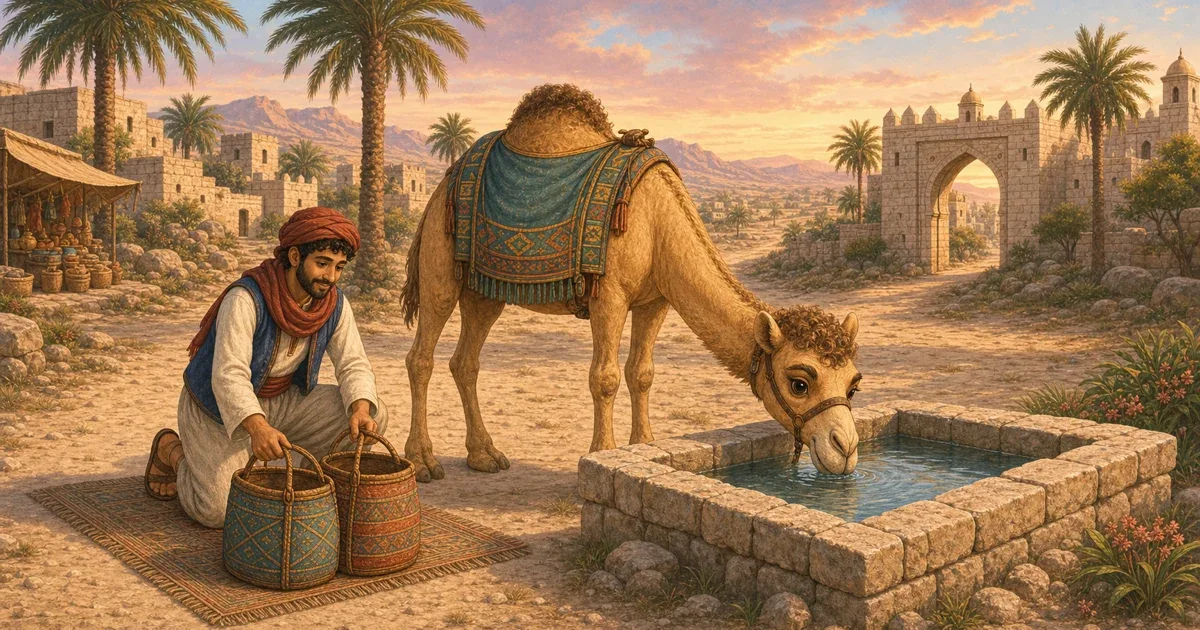
At first light, the towers of White Stone City turned pink and gold. Amir spread a woven mat beside the gate and prepared for the long road to Palm Village. He arranged sacks of spices, little bottles of perfume, and rolls of cloth into two even piles.
Hassan, his sandy-colored camel, watched the water flasks more closely than the luggage.
Amir filled a wide travel bowl.
Drink well, Hassan. We have a long road ahead.
Hassan drank, then lifted his head. He was still thirsty, but the morning sun was rising and the small caravan was nearly ready.
Was that enough? Amir asked.
Hassan hesitated.
I think so. I don't want to delay us.
The market was noisy, and Amir did not notice the uncertain words "I think." Believing Hassan was comfortable, he secured one equal load on each side, checked that no strap pinched, and hung two water flasks and the bowl within easy reach.
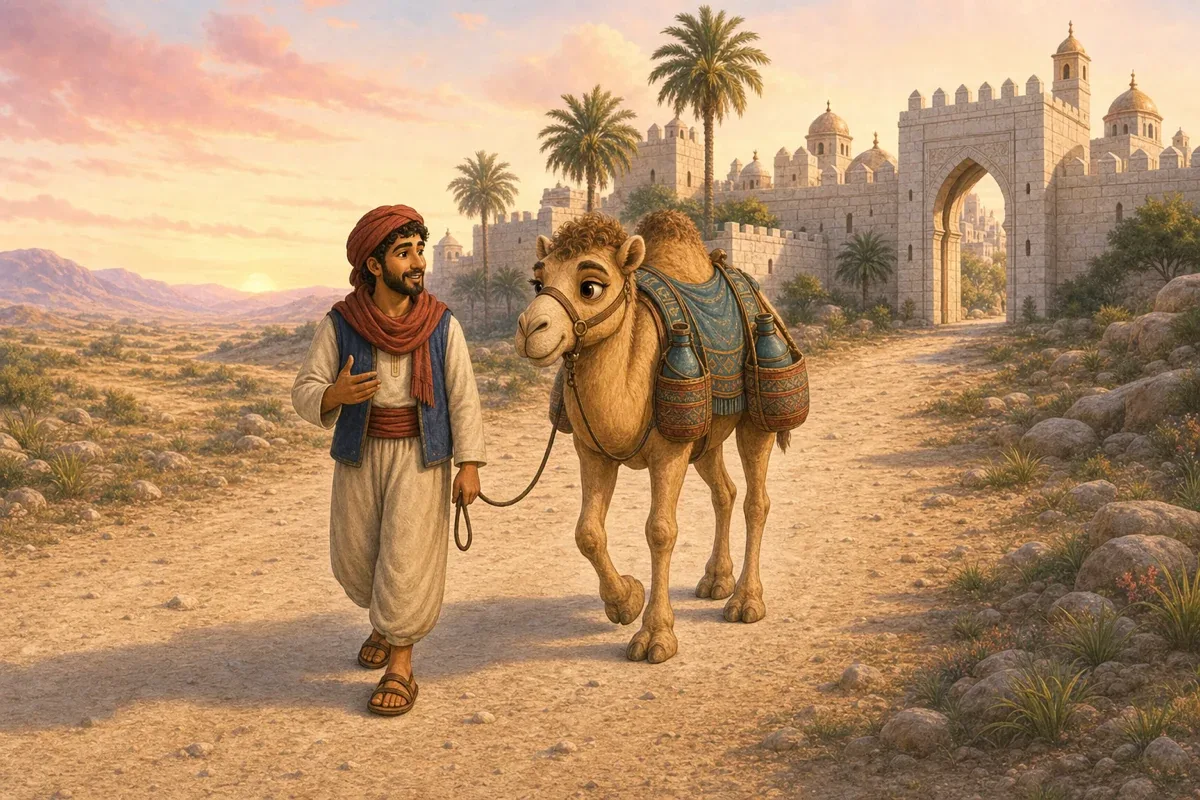
They set off in the cool morning breeze. Amir walked beside Hassan and described the village ahead: a date market, tall palms, and a cool stone trough near the gate.
Hassan smiled at the word "water," but he said nothing.
When Thirst Spoke Up
Hours later, the sand shone brightly and the air grew hot. Amir stopped in the shadow of a large rock. After taking a small sip, he held up the bowl.
Would you like some water?
Hassan was thirsty, but a worried thought stopped him. "I said I was fine this morning. If I change my answer now, Amir may think I am not strong enough for the journey."
I can wait until the village, Hassan replied.
They continued. Soon Hassan saw a blue patch trembling over the sand. It looked like a pond. He quickened his steps, but the shining water moved farther away and finally vanished.
That was a mirage, Amir explained. Heat can bend light and make the distance look watery.
Hassan lowered his head. His thirst had made him believe the first blue shimmer he saw. His steps shortened, and even the colorful hills no longer interested him.
Amir noticed immediately and stopped.
Your walk has changed. Is a strap uncomfortable? Is the load too heavy?
Hassan took a steady breath. This time, he did not say he was fine.
The load is balanced, but I am very thirsty. I have been thirsty since morning. I was afraid of slowing us down or looking weak.
Amir sat beside him so they could speak face to face.
Thank you for telling me. Water and rest are not prizes we earn after the work is finished. They are part of the journey. And I need to ask carefully more than once.
The Acacia Stop
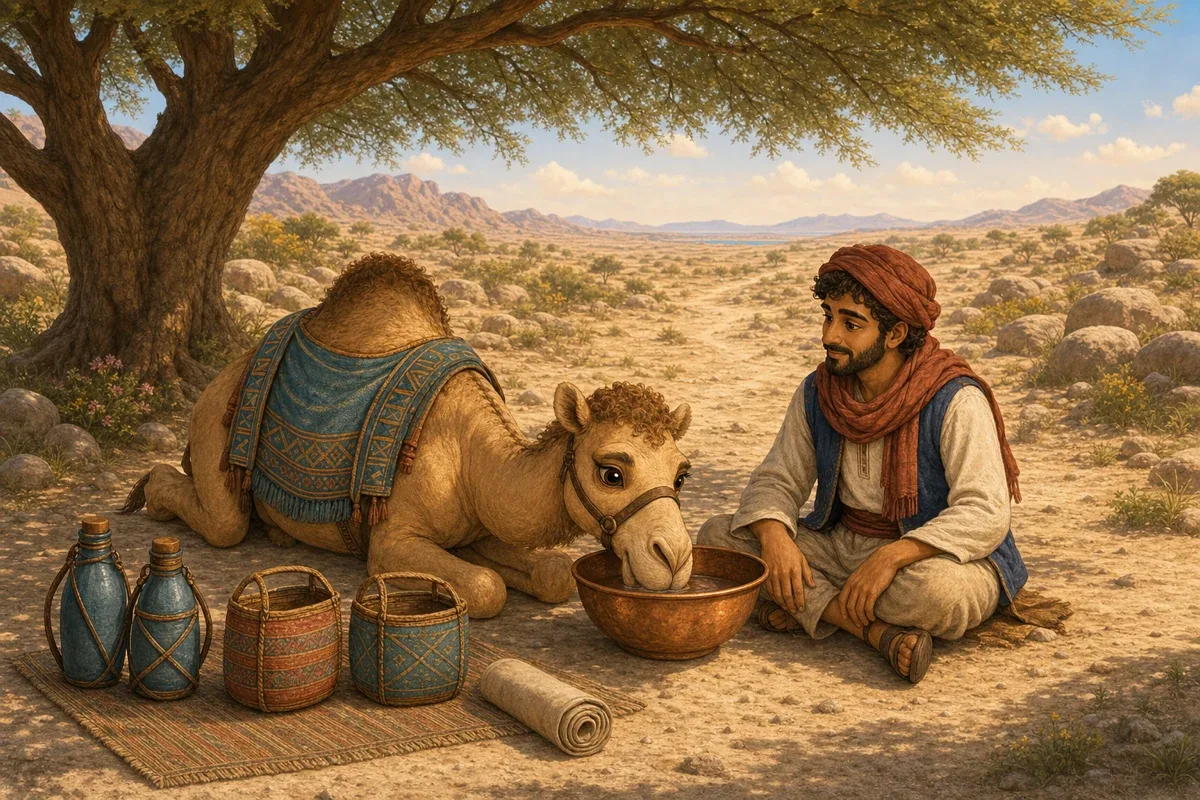
Amir led Hassan to a nearby acacia tree. He removed the sacks and placed them on the mat, loosened the harness, and let Hassan's back rest. Then he poured water into the wide bowl and waited while Hassan drank calmly.
He did not rush him or pour out all their water at once. He gave Hassan time and offered more when Hassan raised his head and asked.
When Hassan felt better, he said:
I thought a strong camel never asked to stop.
Amir smiled.
Strength means knowing when to continue, when to rest, and when to speak. A good companion notices, asks, and listens.
Amir opened the route map. Together they divided the remaining distance into three stops: the round rock, the small hill, and the first palms of the village. They agreed to pause at each one, even if either traveler felt able to continue.
Amir reloaded the sacks after checking their balance and carried one small bundle himself. At every stop he asked one clear question:
Water, shade, or are we ready to continue?
Hassan answered honestly. Once he said, "We can continue." At the next stop, he asked for a drink. Near the small hill, he requested five quiet minutes in the shade.
The pauses did not ruin their schedule. Hassan's steps became steady again, and they reached Palm Village before sunset.
Water at the Village
At the village gate, Amir removed the luggage first. Then he led Hassan to the stone trough made for animals. Hassan drank slowly while Amir wiped the dust from his neck with a damp cloth.
Hassan looked at the clear water.
This is better than the mirage. It is real, it is close, and I did not have to hide my thirst until I reached it.
On our return journey, Amir said, we will leave earlier, carry extra water, and choose our rest stops before we set out.
The next morning, that was exactly what they did. They packed an easy-to-reach bowl, an extra flask, and a light shade cloth. Most importantly, they made a simple agreement: neither companion would guess what the other needed, and neither would hide discomfort to appear strong.
After that journey, Hassan was remembered as the thirsty camel for a surprising reason. He had taught the whole caravan a lesson worth sharing: thirst is a message, and listening to it is wise.
What Can We Learn?
- Asking for water or rest is not weakness.
- Bodies have different needs, especially during heat and activity.
- A responsible companion notices, asks, and listens.
- Planned rest stops make a journey safer and more comfortable.
- Honest words keep small problems from growing.
Discussion Questions
- Why did Hassan hide his thirst at first?
- What signs helped Amir notice that Hassan needed a break?
- What did Hassan learn from the mirage?
- How did Amir change the journey after listening to Hassan?
- What is the difference between being strong and hiding discomfort?
- What can you say when you need water or rest during play or travel?