 English
 العربية
 Français
 Deutsch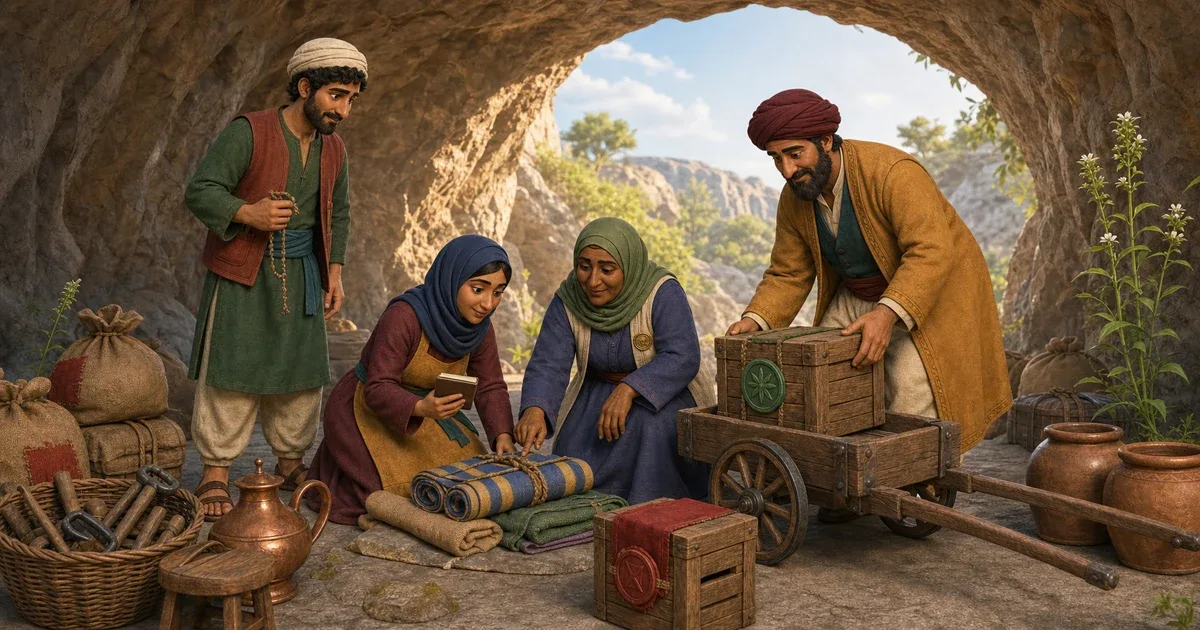
Ali Baba and his cousin Marjana ran a small repair workshop at the edge of the market. Ali mended chests, stools, and wooden shutters. Marjana kept the orders straight and made sure every customer received the right tools, cloth, and change.
Ali's older brother, Qasim, was a successful fabric merchant. He cared for Ali, but he sometimes measured success by the number of coins in a box. He forgot that trust was valuable precisely because it could not be weighed.
That month, useful things began disappearing from the market: bolts of cloth, copper lamps, carpenters' tools, and sacks of grain. None of it belonged in a fairy-tale treasure heap. Each item was part of a family's living.
Huda, the market steward, recorded the colored seal used by every shop. She also gave one firm instruction:
If you notice a clue, bring it to me. Do not chase anyone or investigate alone.
A Word at the Rock
One morning, Ali went beyond the town to collect fallen branches for tool handles. On his way home, he heard many hoofbeats. He stepped away from the road and waited behind a broad rock.
A line of riders in matching cloaks stopped before what appeared to be a solid cliff. Ali counted them with the knots on his cord. There were forty.
Their leader faced the stone and said:
Open, Sesame.
A hidden door moved aside. The riders carried bundles into the cave and came out again. When the last hoofbeat had faded, Ali stayed where he was. He did not rush toward the opening. Instead, he sketched the rock, a nearby sesame plant, and the triangular mark on one of the bundles.
Back at the workshop, he told Marjana everything. Her first question was not, “How much gold did you see?”
She asked:
Did any bundle carry a market seal?
Ali remembered a roll of cloth tied with blue and yellow bands, just like Amina's missing stock. They went straight to Huda. She thanked Ali for keeping his distance and arranged a daylight visit with two trusted market wardens.
What the Cave Held
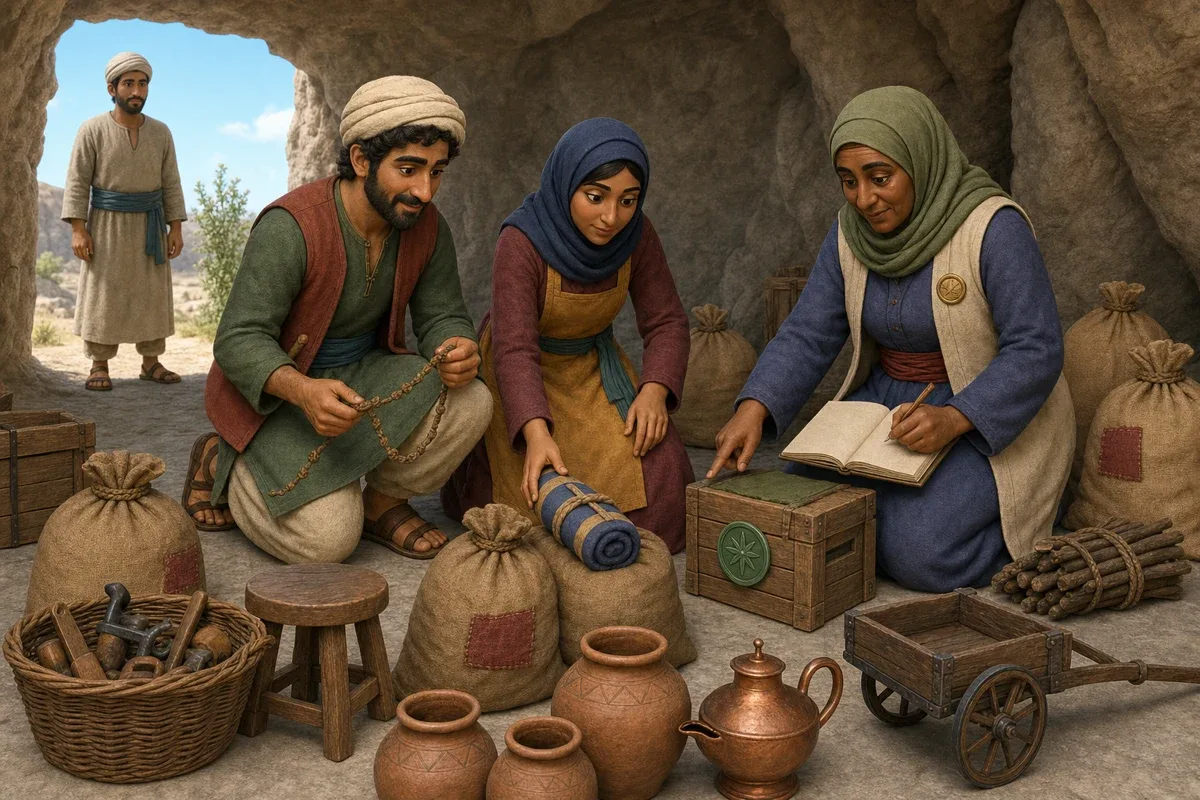
The next morning, Ali repeated the words he had heard. The stone door opened quietly. One warden remained outside while Ali, Marjana, Huda, and the other warden entered.
There was no glorious mountain of gold. There were livelihoods: a carpenter's chest with a green star seal, Amina's blue-and-yellow cloth, grain sacks patched in red, and copper lamps whose maker had searched for them all week.
Huda held up a hand.
We record before we move. Returning people's property takes order as well as courage.
Marjana grouped the goods by their colored seals. Ali counted the crates. Huda noted each item. They did not open private parcels, and nobody claimed a reward from someone else's loss.
Qasim Rushes Ahead
Qasim had seen the group leave town. Curious, he followed the cart tracks and discovered the cave. When he spotted two missing fabric rolls from his own shop, a new thought pushed aside the sensible one: if he entered first the next morning, perhaps everyone would call him the hero and offer him a grand reward.
At dawn, Qasim went alone and used the secret words. He stepped inside, but after several minutes the stone door slid shut. Panic scrambled the phrase in his memory.
“Open, Barley!” he called. Then, “Open, Chickpea!”
The door did not move. Qasim stopped shouting, sat clear of the crates, and breathed slowly. He called for help rather than pushing the stone or damaging the goods.
Outside, Marjana noticed his footprints near the road. Ali noticed that Qasim had not opened his shop. Huda's team arrived for their planned collection, opened the cave, and found him safe.
Qasim lowered his head.
I wanted to arrive before everyone else, so I left the plan behind. I am sorry.
Ali embraced him, then answered honestly:
I am glad you are safe. A true apology also helps repair the trouble it caused.
Under Huda's supervision, Qasim spent the day loading the recovered goods onto market carts. No one pocketed a secret coin. The purpose was to return every object to its owner.
The Silent Oil Merchant
The next evening, an elegant stranger arrived at Ali's workshop. He said he was a traveling oil merchant and asked to leave several large jars in the courtyard until morning. His cloak carried the same pale gray dust found near the cave.
Ali offered ordinary hospitality, but Marjana paid attention. A full oil jar made a heavy liquid sound when it was moved. These jars were too light and completely silent. On one, a triangular clay seal had recently been scraped away. It matched the mark in Ali's sketch.
Marjana did not lift a lid or confront the stranger. She hung a blue cloth in the workshop window, the quiet signal she and Huda had agreed to use if something suspicious appeared. Then she kept the conversation calm until the steward and her team arrived.
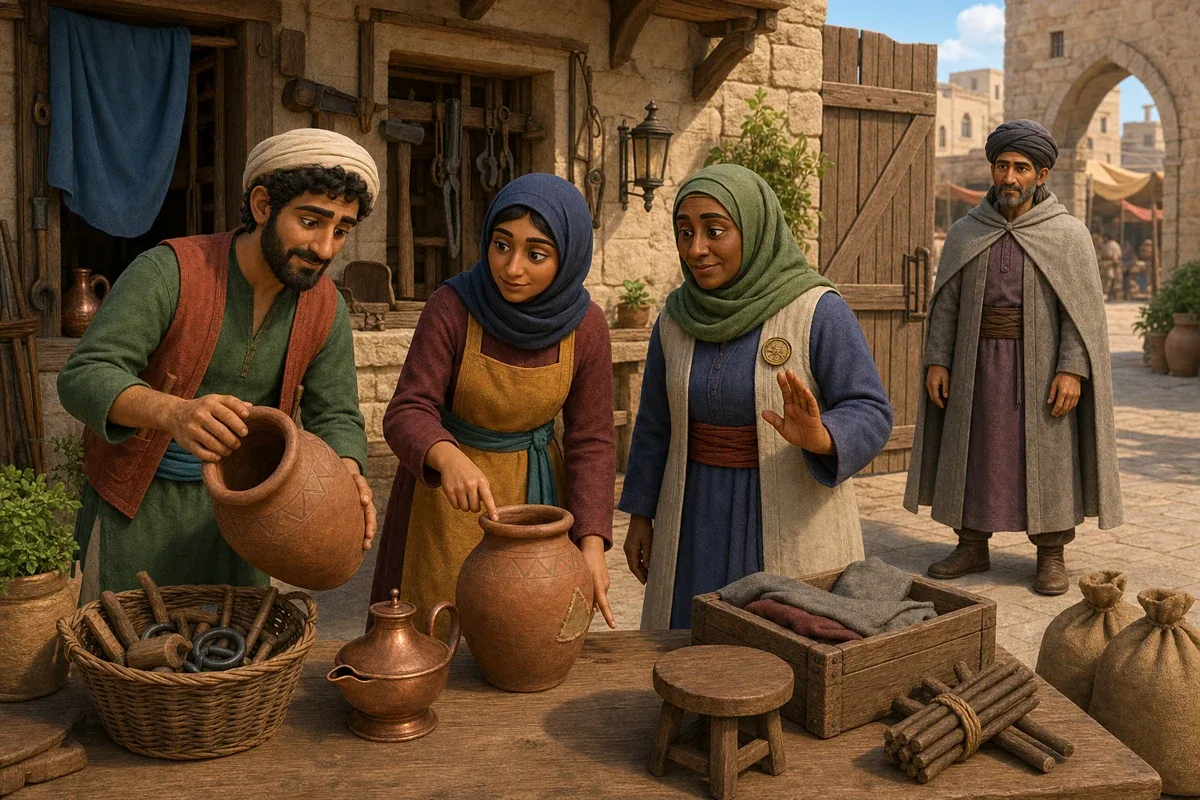
Huda asked the merchant to remain while the jars were inspected. Inside were folded matching cloaks, empty carrying sacks, and copied market seals, but no oil. Dust from the jars matched the cave floor. Meanwhile, market wardens observing the roads identified the rest of the group by the same seals and cloaks without any chase through crowded streets.
The town council heard the evidence and allowed everyone to speak. The group was required to return what they had taken, replace what had been damaged, and complete supervised work until their debt to the market was repaired. Truth did not require a battle.
The Treasure That Could Not Be Stolen
Cloth, lamps, grain, and tools returned to their owners. Qasim used his best cart for deliveries and apologized to everyone delayed by his reckless choice. Ali returned to his woodworking. Marjana began helping Huda improve the market's seal records, because she noticed details that hurried people missed.
The townspeople sealed the empty cave and planted real sesame bushes near the road. Whenever children saw the small flowers, they heard a different kind of treasure story.
“Open, Sesame” was not its greatest secret. The greater secret was that Ali did not turn stolen goods into personal wealth, Marjana did not turn cleverness into danger, and Qasim learned that returning to a team could be braver than racing ahead.
One afternoon, Qasim carried a repaired chest back to its owner.
I used to think treasure was whatever we could carry away.
Marjana smiled.
Sometimes treasure is what we carry back. Trust returns with it.
What Can We Learn?
- Found property does not automatically belong to the finder.
- Calm evidence and responsible help are safer than a solo confrontation.
- Cleverness can mean waiting, planning, and asking for support.
- A sincere apology includes work that repairs the harm.
- Honesty and cooperation can restore both property and trust.
Discussion and After-Reading Questions
- Why did Ali stay away from the cave after the riders left?
- What was Marjana's first question, and what did it show about her priorities?
- How did Huda's team identify the market goods?
- What mistake did Qasim make, and how did he help put it right?
- Which clues made Marjana suspicious of the oil jars?
- Why did she use the blue signal instead of confronting the stranger?
- How is taking stolen treasure different from returning lost property?
- Which trusted person could you tell if you noticed something suspicious or unsafe?