 English
 العربية
 Français
 Deutsch
An old orchard tale says that rabbits did not always have long ears. Long ago, their ears were small and soft, rising only a little above their heads. This is the story of Rami and Rama, two young rabbits who discovered that hearing and listening are not quite the same thing.
Rami and Rama lived with Mother Warda in a warm burrow beside a large orchard. Cream-colored Rami loved jumping over stones. Light-brown Rama loved following every interesting smell.
One busy morning, Warda said:
Gardener Salma will be working near the irrigation channels today. I am going to gather clover. Stay inside the yard until I return, and we will visit the orchard together this afternoon.
Rami asked:
Even if we smell carrots?
Warda smiled.
Even the finest carrot in the world. Listening is not only letting my words reach your ears. It is understanding them and making a safe choice.
The young rabbits promised to stay and waved goodbye at the little gate.
A Scent Beyond the Gate
Before long, a breeze carried the smell of fresh carrots across the yard. Rama's nose twitched.
We could look from the edge of the path and come straight back.
Rami hesitated.
Mother said the irrigation area would be busy.
I heard her, said Rama. We will not go near the water. One look cannot cause trouble.
They slipped through the gate and followed the rows of green plants. A large wicker harvest basket rested on a low wooden cart. It was filled with carrots, beans, and apples Salma had gathered that morning.
I only want to see whether one of those carrots is bigger than my head, said Rami.
He placed his paws on the cart. Rama hopped up beside him for a better view. The cart tilted slightly, and the basket slid gently onto the grass. Carrots rolled beneath bushes, apples scattered beside the path, and bundles of beans landed near a shallow irrigation channel.
The rabbits froze.
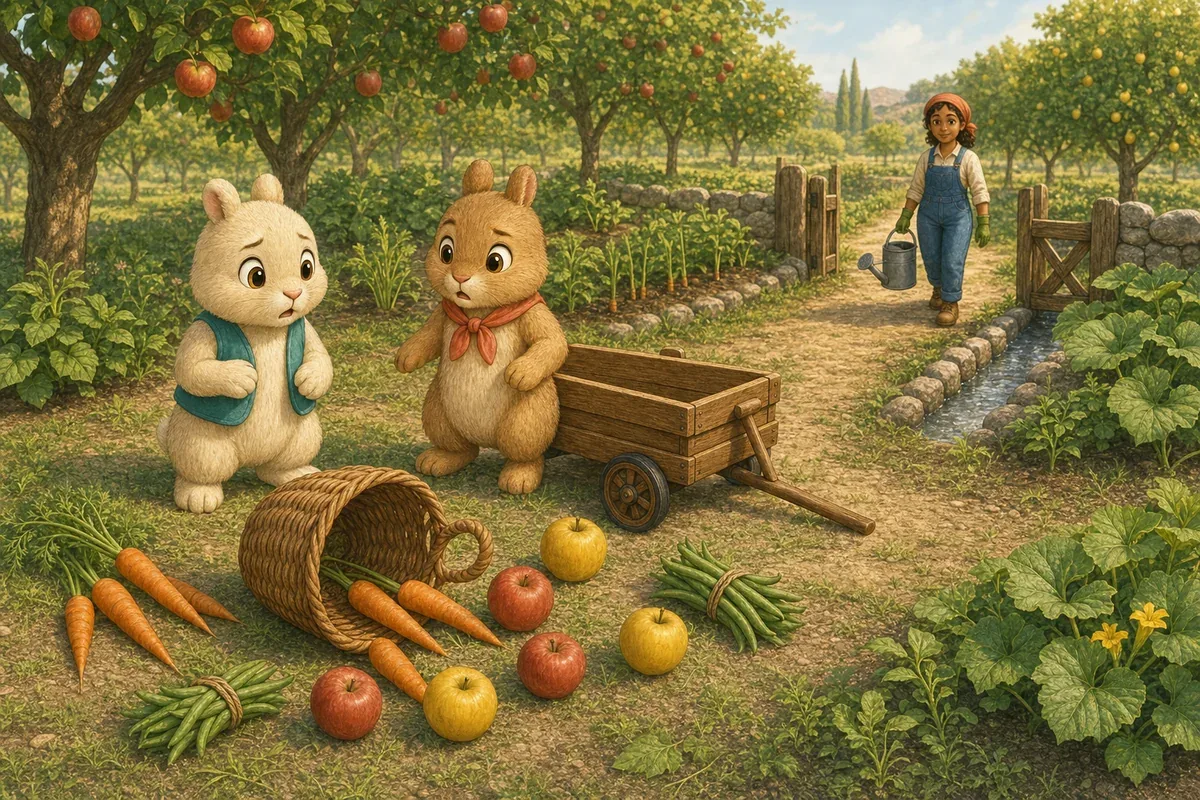
Let us run before anyone sees us, whispered Rama.
Rami almost agreed. Then he heard a faint change in the water: trickle, gurgle, stop. Some bean leaves had fallen across a small opening that directed water toward the seedling beds.
If we hide, Salma will not know why the water stopped. We caused this, so we must tell her.
Truth Before Excuses
Salma appeared at the end of the row carrying a watering can. She looked at the fallen basket and then at the rabbits. Instead of raising her voice, she set the can down.
Is either of you hurt?
They shook their heads.
We are safe, said Rama, but we broke our promise. We tried to look inside the basket, and it fell.
Rami added:
Leaves are blocking part of the irrigation channel. We heard the water change.
Salma checked the channel and saw that the smallest seedlings were no longer receiving water.
Thank you for telling the truth. A mistake needs repair, not hiding. Stay on the dry grass and help me with your eyes and ears. I will handle the channel.
Rama gave a small laugh.
Our ears are not very impressive.
Long ears do not automatically make a good listener, Salma replied. A good listener becomes quiet, identifies the sound, and then acts safely.
Wearing her gardening gloves, Salma cleared the leaves. Water flowed toward the seedlings again. Some of the produce was still hidden among the plants, so the rabbits sat well away from the channel and closed their eyes.
They heard an apple shift beneath a broad leaf. They heard a carrot tap a stone. Then they heard Mother Warda calling from the gate.
Ears That Followed the Sounds
Warda arrived worried, then relaxed when she saw the rabbits beside Salma and away from the water. Rami and Rama told her the whole story.
I am glad you stayed to tell the truth, Warda said. Leaving alone was unsafe. Now we will stay together and help Salma restore the basket.
The four worked as a team. Salma collected everything near the channel. Warda bundled the beans. Rami and Rama searched only along the dry path.
Each time they grew still and listened, their little ears turned toward a new sound. Rami's ears rose a little when an apple rolled behind a crate. Rama's ears stretched a little when carrot leaves rustled under a squash plant.
Nothing pulled or hurt their ears. In this gentle folktale, the ears simply grew whenever the rabbits changed a sound into understanding and understanding into responsible action.
At sunset, one carrot remained missing. Everyone stopped moving. Rami turned his right ear toward the fence. Rama turned her left ear toward the mint patch.
Together, they heard green carrot leaves brushing against a small basket in the breeze. The carrot was safely hidden there, far from the channel.
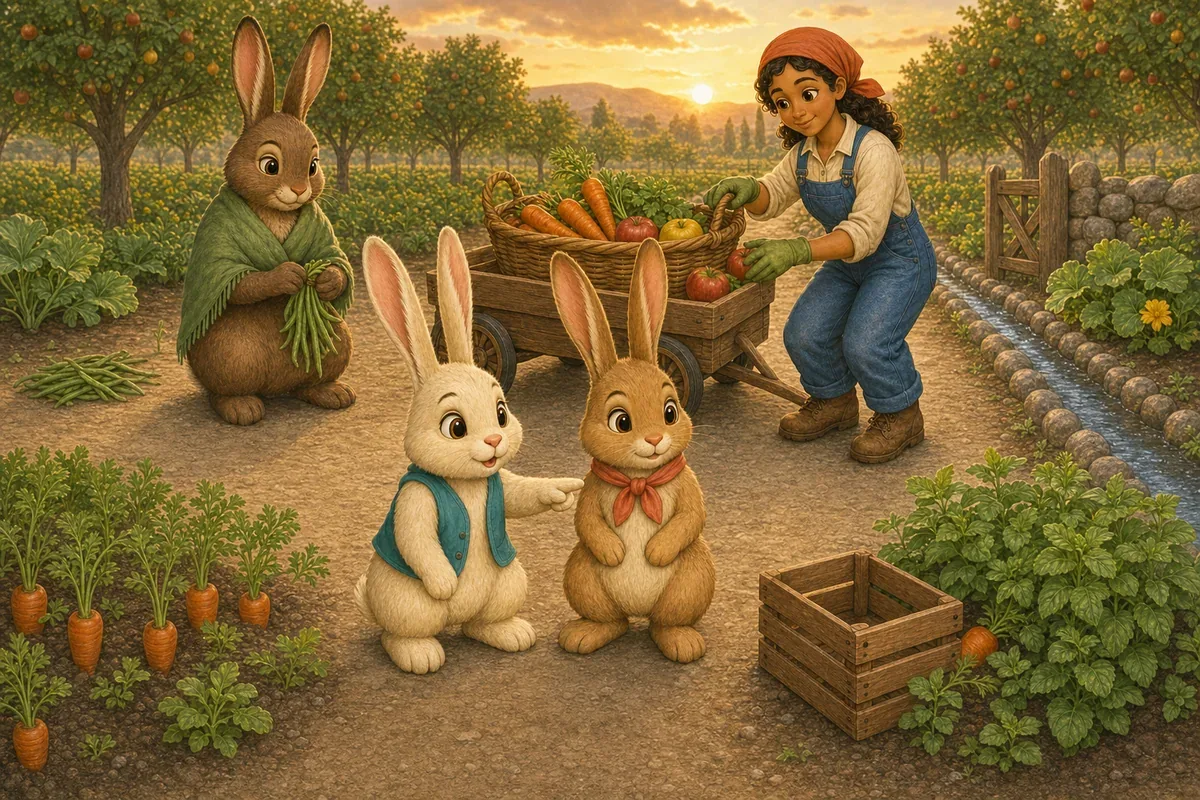
They placed the final carrot on top of the harvest. Salma asked:
What is the difference between hearing and listening?
Hearing is when a sound reaches my ears, said Rami.
Listening is when I pause, understand, and choose what to do, added Rama.
The Orchard Reminder
On the way home, the rabbits noticed their shadows. Two long ears now rose above each small head.
Warda smiled.
Those ears will help you notice many sounds. But even the finest ears are useless if their owner chooses to ignore good advice.
The tale says that the young rabbits in their family were born with long ears from that day onward. The grown rabbits told them about the harvest basket, not to frighten them, but to show that admitting and repairing a mistake is braver than running away.
Whenever Rama smelled fresh carrots after that, she no longer said, “We will only look.” She asked whether the path was safe and whether an adult could come too.
Rami liked to say:
My ears may be long, but my choices make me a good listener.
What Do We Learn?
- Listening means understanding advice and acting on it, not merely hearing words.
- Telling the truth helps us repair a mistake before it becomes larger.
- We repair damage safely and with help from a trusted adult.
- Curiosity is valuable, but it needs permission and clear boundaries.
- This story is make-believe. Real rabbits are born with long ears that help them detect sounds, and blood vessels in their ears also help release some body heat.
Discussion After Reading
- What did Warda ask Rami and Rama to do before she left?
- How did the harvest basket fall?
- Why did the rabbits decide not to run away?
- How did careful listening help them find the produce?
- How would you explain the difference between hearing and listening?
- What can you do if you accidentally damage or spill something?