 English
 العربية
 Français
 Deutsch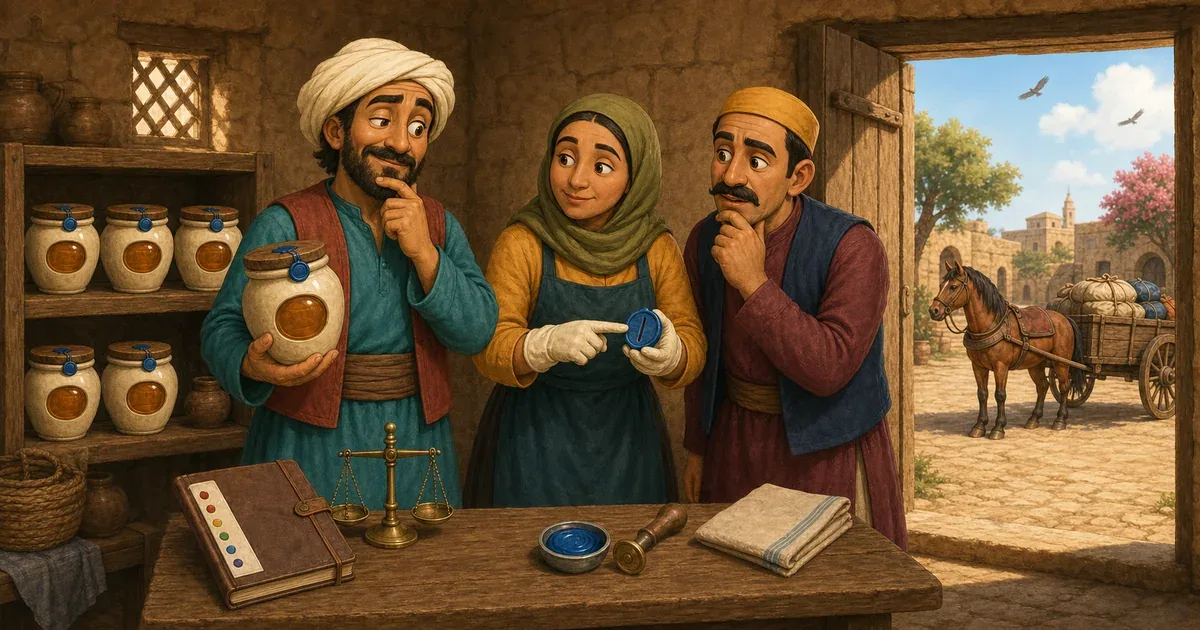
Juha owned six jars of spring honey. Beekeeper Amina had gathered it from hives among lemon trees and wild thyme, and every jar glowed like captured sunlight.
When Juha needed to travel for ten days to sell cloth, he worried that the jars might spoil in his warm house. He carried them to the cool storeroom of his neighbor, Nabil the merchant.
I would like you to keep these until I return. You are my friend, and I trust you.
Together, they lined the jars on a wooden shelf and counted them from one to six. They pressed a dot of blue wax across each lid and wrote the quantity and weight in the storeroom ledger.
You will find everything exactly as you left it, Nabil promised.
Juha thanked him and set off with an easy mind.
Six Silent Jars
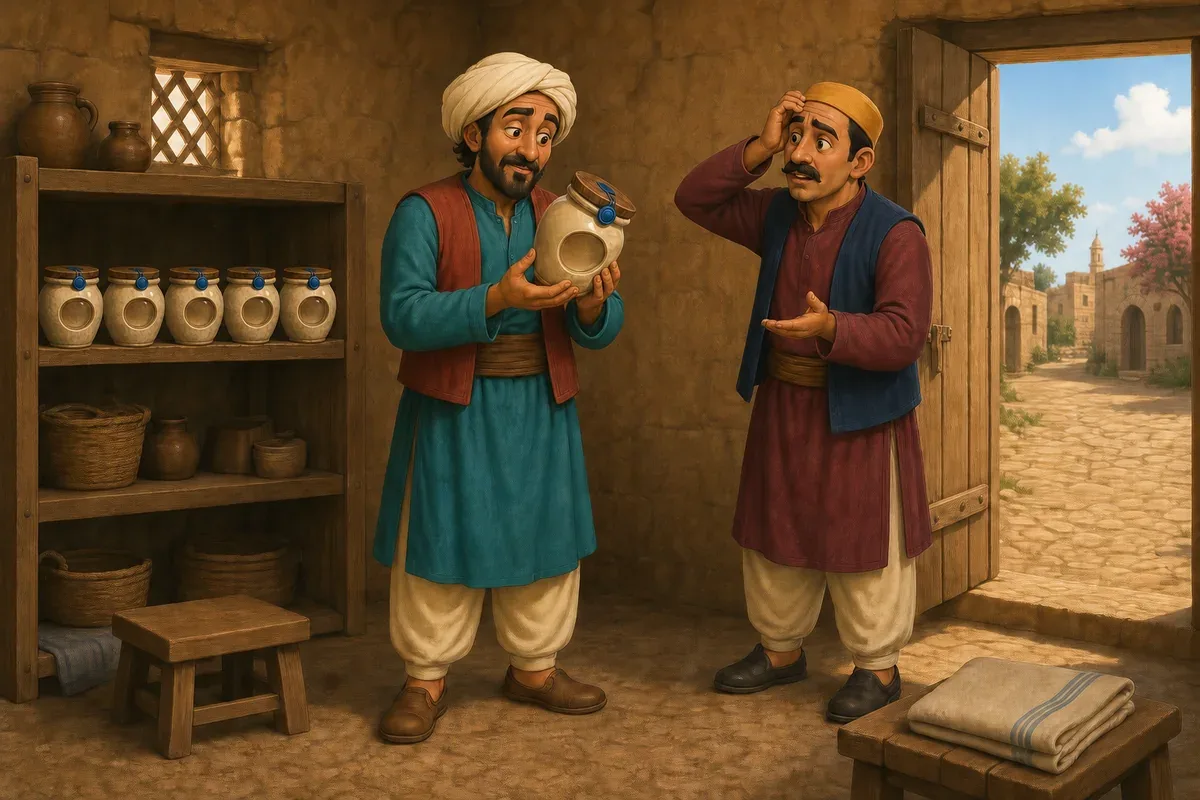
Ten days later, Juha returned. The jars were still arranged on the same shelf, but their little glass windows no longer shone with gold.
He lifted the first jar. It was light. The second was lighter still. When he opened them, only the faint smell of honey remained.
Nabil, where is the honey?
Nabil wiped his forehead.
Something unbelievable happened. Mice came at night and drank it all.
Juha looked at the spotless jars, the clean shelf, and then at his neighbor.
Six complete jars?
They must have been very thirsty mice.
Did they remove the lids and put them back?
Our mice are unusually clever.
Did they wipe every sticky drop from the shelf too?
Nabil paused.
Apparently, they are tidy as well.
Juha did not shout or take anything from Nabil's storeroom. He simply said:
This is too remarkable to ignore. Tomorrow I will bring someone who understands honey and hungry animals.
What the Clues Said
Beekeeper Amina arrived the next morning. She accused no one. Instead, she began with the shelf.
Running a gloved finger along the wood, she said:
There is no honey here. Even a small spill would leave a sticky patch.
She examined the lids.
There are no tooth marks. The old blue seals were cut in straight lines, and newer, darker wax was pressed over them.
Juha raised his eyebrows.
Then these mice use knives, clean shelves, and know how to melt sealing wax.
Nabil tried to laugh, but only a short sound came out.
Amina set an empty jar on a small scale and compared it with the weight Juha had recorded in the ledger.
These are the original jars, but someone removed their contents carefully. The clues do not name that person, but they do show that the mouse story does not fit.
Nabil sat down and stared at the blue wax.
Eagles and a Loaded Cart
That day, Nabil was preparing to take cloth and spices to market. His loaded cart waited outside, attached to his calm horse.
As Juha and Amina stepped into the courtyard, two eagles circled far overhead. Juha looked up.
You should bring the cart inside, Nabil.
Why?
The eagles may swoop down and carry off the horse, cart, and all your goods.
Nabil stared at him.
An eagle cannot carry a loaded cart. That is impossible!
Juha smiled.
Why impossible? In a village where mice open six sealed jars, drink all the honey, wash the shelf, and replace the lids, surely eagles can carry a cart.
Nabil looked at the heavy cart and then at the light jars. He understood. He could not reject an absurd explanation when it affected him while using another absurd explanation to escape responsibility.
Juha did not call the market crowd or turn the moment into public humiliation. He simply waited for an honest answer.
At last, Nabil sighed.
The mice did not drink the honey. I needed money quickly, so I sold one jar and told myself I would replace it before you returned. Then I sold another. Each day made the truth harder to admit, until all six were gone.
Amina said:
Needing help was not the first wrong choice. Taking what was not yours and building an excuse around it caused the harm.
A Plan That Repaired More Than Jars
I need my honey or its value returned, Juha said. I also need to know this will not happen again. What will you do?
Nabil proposed a clear plan:
- repay the value of two jars that same day;
- buy four matching jars from Amina in two scheduled payments;
- apologize to Juha in writing and in person;
- record every item left in trust and keep it in a separate locked cupboard;
- ask openly for a loan whenever he needed help.
Juha agreed, and they entered the dates in the ledger. An apology mattered, but trust would return through repeated action.
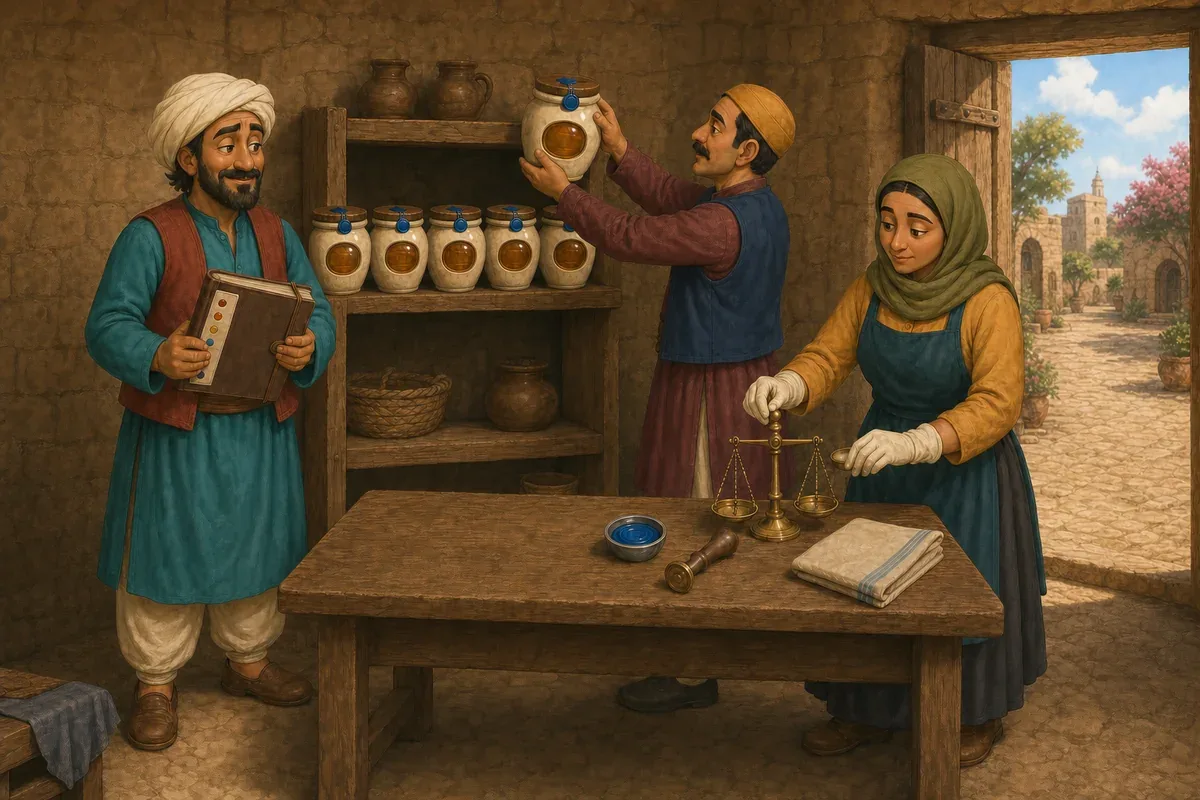
Two weeks later, Nabil placed the final replacement jar on the shelf. Six jars stood full again, each with an even blue seal.
Thank you for not hiding my cart to answer one trick with another, Nabil said.
Juha laughed.
I found something easier. I left the cart where it was and let one sensible question carry the excuse away.
This time, Nabil smiled honestly.
After that, whenever villagers heard an explanation that did not fit the evidence, they did not rush to mock or accuse. They asked:
Is this a tale about mice drinking honey, or is there a truth waiting for courage?
What Do We Learn?
- Trust means protecting what belongs to another person and never using it without permission.
- Repeating an excuse does not make it true; compare it calmly with the evidence.
- A clever question can expose a contradiction without revenge or humiliation.
- Admitting a mistake begins repair, but returning what was taken and changing behavior complete it.
- Asking openly for help is better than solving a problem with someone else's property.
Discussion After Reading
- How did Juha and Nabil record the honey before the journey?
- Which clues made the mouse story unconvincing?
- Why did Juha mention eagles carrying the cart?
- How was Nabil's repair plan different from a simple apology?
- What could Nabil have done when he needed money?
- Suggest a calm question that could test an explanation that does not make sense.